Wednesday, August 2, 2023

Nava Vrindavana Dispute


As a practicing Madhva with due respect to all our 24 or 25 Mathas, which were formed to propagate teachings of Acharya Madhva, I am watching  each year there will be some dispute or the other, earlier Mula Rama and now with 9 Vrindavanas at Anegondi. It was a very low key affair in olden days when river Tungabhadra sometimes was flooding with the place immersed under water for a couple of days, even after a dam was built near Kampli. 

Our great teachers from Sri Padmanabha tirtha to Sri Rama Tirtha have been interred here as they might have preferred to spend their last days near monuments of earlier Gurus, or on their entourage covering Vijayanagar province, for which Sri Vyasarajaru was a principal adviser to 3 generations of rulers here. As far I know there was no dispute before 150 years or so, when hardly any pontiff visited this place, except on few occasions. 

Now that a dispute has been raised by disciples of  Uttaradi, Raghavendra Mathas about Vrundavan of Sri Jayatirtharu, a great commentator on Sri Madhvacharya's works, whether it is at Anegondi or Malakhed near Kalaburagi.  

Fortunately, above dispute seems to have been settled amicably in a meeting of pontiffs of contending Mathas recently. Still, Vyasaraja matha cannot claim ownership of their Guru Vrindavanas, which the Hon'ble Courts have to reconsider. 


Brindavanas  in Anegondi

 1. Shri Padmanabha Thirtharu --- 1317-1324

 2. Shri Kavindra Thirtharu ---1392-1398

3. Shri Vageesha Thirtharu ---1398-1406

.4 Sri Vyasaraja Thirtharu – 1447-1539 (Shri Vyasaraj

a Mutt)

5. Raghuvarya Thirtharu  (1502-1537 (?)

 6. Sri Srinivasa Tiitharu - 1539-1564 (Shri Vyasaraja Mutt)

 7. Sri Rama Thirtharu - 1564-1584 ((Shri Vyasaraja Mutt)

8. Sri Sudheendra Thirtharu - 1614-1622 ( Sri Raghavendra’s Guru)

9. Sri Govinda Odeyaru ---(1534)( Sri Vyasaraja’s Disciple)

Generally, unless there is a land grant by a ruler, we fail to have any historical proofs for such tombs of saints. Traditional texts are always unclear or confused about such events, since the saints themselves were great men who discouraged publicity or fanfare by their successors or followers to celebrate their Aradhanas. 

The great Commentator on Madhva texts popularly called Teekacharya, the master commentator was a recluse living in a cave composing tikas to Sri Madhvacharya, answering later objections by other schools of Vedanta. He was away from public life, blessing those who occasionally visited him for knowledge or blessings. 

After the advent of IT industry, when neo- Madhvas' economical status improved, several youngsters turned towards learning Madhva texts, which even some of their forefathers  were unable to learn. They started visiting unvisited places of Madhva interest from Udupi to Rameshvaram, or even North of India to trace the final resting places of earlier Gurus. by way of this, disputes began about these monuments, of whom many are lost for ever, like the celebrated Sri Vidyadheesha Tirtharu. 

While Samadhi places of Sripadaraja, Vyasaraja, Vadiraja, Vijayeendra Swamijis are popular places of visit, some even go to farway Malkheda, on the banks of a cranky annual river Kagini/Kagina to have darshan of Sri Jayatirtha Guru. Several overzealous Shishyas, pestered the Swamijs to prove their either original/ supreme place among Madhva institutions, which our great saints never had! 

Even Courts of law were approached, and judgements were passed not to hurt either of the parties. The Swamiji of Sripadaraja Matha, after trying to compromise other Mathas, finally consecrated Sri Padmanabha Tirtha's Brindavan, near Sripadaraja's Vrundavan to avoid the never-ending dispute. 

Finally, all swamijis are learned and enlightened to take a stand which is right, but disciples seem not to allow them to settle disputes without annual or occasional fight with words as swords!!! each one of them argue on their social media post about arguments of other Matha, and try to prove their point in a dialectic manner. 

Sunday, June 11, 2023

Story of Yavakrita


 The Pandava brothers were on exile after getting defeated in the wrongful game of dice. They left their palace and roamed about forest places where they met great sages, spiritual masters and demons also. They arrived at the Ashrama of Raibhya Muni, on the banks of the sacred Ganga.

Rishi Lomasha narrated the Pandava brothers about what happened at that place, during the age of Rama. He showed them the place where Rama’s brother, Bharata had a holy dip to get cleansed of sins if any committed by him. Earlier also, Indra, lord of Angels had taken a holy dip here, to get rid of sin of killing Vrutra, a Brahmana. Aditi, wife of sage Kashyapa performed tapas and bathed here to beget Bhagavan Vishun, born as Vamana.

Yudhistira was advised by Rishis to have bath here, after climbing the mountain to get rid of anger and frustration, after his defeat in the game of dice, which he followed. Great men of those ages believed that taking a  holy dip in running waer would wash off any sins committed by them knowingly or otherwise.

Lomasha narrated the story of Yavakrita, son of sage Bharadwaja, a great friend of Raibhya Muni. Raibhya had two sons, Paravasu and Aravasu. Both had learnt Vedas at a very young age, and were respected as scholars. However, Bharadwaj was not respected like his friend as he was not very competent in Vedas.

Yavakrita, son of Bharadwaja was hurt since his father was not respected like his friend Raibhya either by common people or Kings of those times. He was very upset by this  and decided to learn Vedas than being a wise sage like his father. He practiced hard penance to pleae Indra Deva, head of Gods.

Indra was surprised to see this young boy engaged in deep penance, torturing his slender body. He manifested before him as asked: ‘ My dear boy! Why are you so much obsessed of Vedic learning?” innocent  Yavakrita replied: ‘ Oh Deva! I wish to become a great scholar, learning the veda Samhitas. I am doing this penance only to get hold of Vedic lore, please bless me’.

Indra Deva smiled at him and said: ‘ My dear young boy, go home and request a Guru to teach Vedas to you, instead of this hard penance here’ you should not torture yourself for this’. Yavakrita did not heed to even Indra’s sane advice. He further tortured  his body by cutting his limbs to offer to Gods. He continued tapas o the banks of Ganga.

One early morning, Yavakrita saw an old man doing a strange thing. He was throwing handful of sand to water! When he asked the old man he replied: ‘ You are too small to understand this. I am building a dam across river Ganga by doing this, so that people can easily cross this large river’. Is it not useful? He asked the boy.

Yavakrita laughed at his foolishness. ‘Can you build a dam by throwing handful of water? It looks very silly to me. Instead of doing this stupid task of throwing sand into this mighty river, take some more useful work to help people.’ He said.  

The old man smiled at him and said: ‘ Oh foolish boy! My work is better than doing just rituals and tapas instead of mastering Vedas studying  under a Master! Yavakrita failed to know it was Indra deva himself, who looked like the foolish old man throwing sands into Ganga! He begged him to grant him a boon to learn Vedas. ‘ well, I grant you the boon you seek: go back to your hermitage and study Vedas, by which you will become lerned and respected by people around you’.

Yavakrita returned to his Ashrama and became a scholar, after studying Vedas. He was so proud that by boon of Indra, he has mastered Vedas. It was not due to his Guru’s teaching Vedas to him’. His father Bharadwaja did not like his son’s pride. He thought, by arrogance, the foolish boy might insult senior Rishis like Raibhya and others’. He warned his so: ‘ Look God,s grant boons to fool them, like merchants sell intoxicants for money, by consuming them people ruin themselves finally’. He have several earlier examples of fools getting mislead by Gods.

Yavakrita did not take his father seriously, due to his blind arrogance. Once, he had to run in fear after practicing a certain Mantra by practicing it, he turned mad. His evil eyes fell on his friend’s beautiful wife. Raibhya after knowing his sinful behaviour,  plucked a hair from head and threw on Yavakrita, which made him blind. Meanwhile, his friend killed him after learning his sinful attitude to his dear wife, even Bharadwaja failed to save his foolish and arrogant son.

Sage Bharadwaja said: Oh my son, you died of your own pride and vanity. He knew his friend Raibhya had killed him. So saying he killed him, and sighed: ‘Alas! People with no sons are blessed indeed, I lost my arrogant son, and killed my friend also. Saying so, he cremated his son’s body and burnt himself by throwing into funeral pyre.

Mere learning is not enough: it is very essential to control one’s anger and pride, better than just learning texts and feeling arrogant’; Mere learning might turnout dangerous. 

***

Saturday, February 18, 2023

Sri Vishnu Tirtha Sri


Sri Vishnu teertharu is a free sanyasi, who was Adavi Jayatirthacharya (1756-1806) took sanyasa from Satyavara tirtha of Uttaradi Matha, and is a great writer. who has given great books.. also. His Aradhana is at Madinuru, near Koppal. ( He didn't occupy the seat of Uttaradi Matha due to reasons best known to them ).there is a very interesting incident when Jayatirthacharya heard someone singing ' Govinda Namo Govinda...' which describes ' just be praying Govinda for your betterment and spiritual progrees, nothing else will help you, neither this wife, family or wealth.. instantaneously, he decided to take Sanyasa and live life of a Virakta.
for reasons best known to people who lived then, he was not given Pithadhipatya to rule Uttaradi Mutt, remained as a scholarly writer, saint and philosopher. Stotras composed by him, l authentic interpretations of the great Purana! Bhagavathta Saroddhara, Shodasahi, Chaturdashi and Atmasukha Bodhini, Nyayasudha & Tatvaprakashika glosses. ( tippanis).
rimad Bhagavata Saroddhara of Sri Sri Vishnu Tirtha ( 1756-1816)
Sri Vishnu Tirtha ( Adavi Acharya/ Jayatirthacharya) is known for his Tapas, Sanyasa and utmost dedication to Madhvacharya’s thought. He was a renowned scholar of his times. Born to humble couple, of Shiddapur, near Savanuru, he was reluctant to material world since boyhood. However, his parents got him married, he lead a householder’s life for some time, took care of wife and children.
Later, he took Sanyasa Deeksha from Sri Satyavara Tirtha of Uttaradi Matha under the name of Sri Vishnu Tirtha and did not ascend pItha to keep himself away from Matha Politics of those days. He began writing commentaries in Sanskrit and Kannada.
he had excellent Shastra learning under scholars of repute of his times and turned out as a great scholar himself.
He made an indepth study of Srimad Bhagavatam, contemplated on this great Epic for quite some time, gained insight and selected about 160 verses from it out of 18,000 shlokas, wrote a scholarly, yet simple commentary and named it ‘ Saroddhara’. His Sanskrit commentary is translated by Davanagere Bhima Rao, a committed Madhva, who built a Madhva Sangha- Madhvacharya Seva Samiti, Davanagere and translated some classics like Yukti Mallika, Vishnu Rahasyam, Sattatva ratnamala, a couple of Upanishad Bhashyas into Kannada. He lived up to 1979, and has rendered commendable service to Madhva community.
Like
Comment
Send

Sunday, February 12, 2023

Sri Raghuttama Tirtha ( Bhavabodhakara)


प्रणमत् कामधेनुं च भजत्सुरतरुत्तमं
श्री भवबोध कृत्पाद चिन्तामणिमुपास्महे।।

  Sri Raghuttama Tirtha is one among noted commentators of Madhva texts who was pontiff of Madhva Matha, now called Uttaradi Matha, by virtue of the pontiffs were all from either Mumbai-Karnataka, or Hyderabad Karnataka areas with exception of Sri Vedanidhi Tirtha from Tamil Nadu. Sri Raghuttama succeeded his maternal uncle Sri Raghuvaryaru, after is initial learning at Mannur near Indi. He was initiated as a brahma Chari soon after his Shastra learning and toured extensively in Southern India under whose pontificate the number of followers swelled up to Uttaradi Matha, even in Tamil region.

He is respectfully called Bhavabodhakara, after his noted commentaries of this name on Madhva, Jayatirtha works. Since he could get maximum number of disciples to his Matha, when other Madhva Mathas had stuck to their particular centers , except Uttaradi Matha.
Sri Raghuttama lived after Vyasateertha, as a contemporary of Vijayindra Tirtha of Vibudhendra Matha. He spent a large part of life in Tamil Nadu around Kaveri-Pennar belt, touring for most of his time with disciples, composing excellent commentaries on works of earlier Gurus. Numbering 9, his Bhavabodhas, are on Gita Bhashyam, Vishnutatvanirnaya, Tatva Prakashika, ( Jayatirtha), Nyaya Vivaranam (partly continued from Jayatirtha's Tika), Nyayartna Sambhandhadipika on Anuvyakhyanam,. Ishavasyopanishad.
He is the first commentator to mention names of Madhva disciples including Madhava Tirtha.

सुगुण नरहरि श्रीमाधव -अक्षोभ्य तीर्था
हरिभजन नियुक्तान शुद्ध धर्मार्थकमान्|
सुजन नियमनार्थं यः प्रसाद्यापरोक्षं
स भवतु मम भूत्यै पद्मनाभख्ययोगी
Sri Raghuttama Tirtha ruled as Uttaradi Mutt Swamiji and stayed at Tiukkoyilur on banks of Pinakini, near the famous Trivikrama temple. he has a large following in nearby places in Tamil Nadu, who gather for his Aradhana.

Sunday, January 8, 2023

Appayya Dikshitar ( 1520-1593)

 अमरी कबरी भार भ्रमरी मुखरीकृतं |
दूरीकरोतु दुरितं गौरी चरणपङ्कजं ||
- Appayya Dikshita- Kuvalayanadam. 

Appayya Dikshita is one among greatest thinkers of Southern India, when there was an intellectual fight of debates between Dvaita, Advaita, Vishistadvaita and Shivadvaita schools of philosophical thought. He lived between  1520-1593, most part of his life spent in and out of Tiruvannamalai, Chidambaram, and adjacent parts of Tamil Nadu, and visited Andhra Pradesh on tour also. Born as Vinayka Subrahmanya to his pious parents, he rose to the height of a celebrity soon with little support from local Telugu nayaka ruler Chinnabomma Nayak of Vellore Nayaks, of the province. His father Rangaraja Adhvari was a noted Yajnika who performed full time yagas for kings and public. Appayya is probably a pet name at home, which became popular later.

Deekshitar or Deekshitendra, as he is usually addressed by his followers, was a poet of high order and a logician of fame also. He generally picked up fights with local greats like Vijayindra Tirtharu, Doddacharya, and Tathacharya. His debates with Vijayindra Swamiji find reference in works of both stalwarts. He took risk of fame as grihasta, arguing with a great Yati like Vijayindra, student of the great Vyasatirtha. He shook roots of Shankara’s Advaita, by forming his own school of thought, ‘ Shivadvaita’, based on Kashmir Shaivism to some extent and his own theory of knowledge.

He composed great poetry on Shiva, Devi and Vishnu also. His ‘ Durga Chandrakala Stuti’ is well known. Appayya composed treatises like Chaturmatasara, a digest of Dvaita, Advaita, Ramanuja and his own school of thought. ‘ Sidhantalesha Sangraha’ is a primer on Indian Philosophy. His Kuvalayanandam is a treatise on poetics. ‘Shivarka Manidipa’ is a book on his own school of thought trying to compromise philosophical thoughts and theories.Deekshitar had a large family of priests and disciples. Some say he gave a unique form of Shiva worship at Nataraja temple,   Chidambaram, and Tiruvannamalai. The priests here sport a tuft near their forehead similar to Nambudiris  of Kerala. 

Some belonging  to his direct  family line are noted scholar- writer Nilakanta Dikshita of Kalividambanam,a Sanskrit satire, his grandson, and Venkatadhwari of Vishvagunadarsha fame as a travelogue writer, more recently  (Dr) Swami Sivananda ( Divine life Society)  of Himalayas, C.P. Ramaswamy Iyer, noted writer. 

Appayya Deekshitar  passed away in 1593, after assuming Sanyasa by himself. Some say his Samadhi  is at Chidambaram, others  at Adayapalam, near Arani which is very curious unlike those of other Sannyasins.


Sunday, December 18, 2022

Sri Jitamitra Tirtharu. ( 1450-75)


Sri Jitamitra tirtharu was a disciple and successor of Sri Vibudhendra Tirtharu, earlier his Matha was called Vibudhendra and Vijayeendra Matha, now generally termed Sri Raghavendra Matha of Mantralayam. Ananthappa  was a householder, farmer and landlord in the Krishna-Bhima river  belt of Andhra-Karnataka region. He probably renounced his land holdings and family, when he came under the tutelage of the great scholar-pontiff of his times  Sri Vibudhendra Tirtharu, who was much respected Madhva scholar of his times.

Sri Lakshminarayana Tirtha, popularly called Sripadarajaru was his junior in the studentship under Sri Vibudhendra. In one of his compositions he praises his senior yati Sri Jitamitra tirtha:

ವಂದನೆ ಮಾಡಿರೈ ಯತಿಕುಲ ಚಂದ್ರನ ಪಾಡಿರೈ.

ಬಂದ ದುರಿತಗಳ ಹಿಂದೆ ಕಳೆದು ಆನಂದ

ಪಡುವ ವಿಬುಧೇಂದ್ರ ಕರೋದ್ಭವನ ।।

ರಘುಕುಲ ವರಪುತ್ರ ರಾಮನ ಚರಣ ಕರುಣಾಪಾತ್ರ

ನಿಗಮೋಕ್ತಿಯ ಸೂತ್ರ ಪಾಠ ಪಠಿಸುವ

ಸುಗುಣ ಜಿತಾಮಿತ್ರ ನಗಧರ ಶ್ರೀಪನ್ನಗ ಶಯನನ ಗುಣ

ಪೊಗಳುವ ಅಪಾರ ಅಗಣಿತ ಮಹಿಮರ

ವರ ಮಹಾತ್ಮೆ ತಿಳಿಸಿ ಮೊದಲಿಂದೀಪರಿಯಲಿ

ಚರಿಸಿ ನಿರುತ ಮನವ ನಿಲಿಸಿ ಶ್ರೀಹರಿ ಕರಿವರದನ

ಒಲಿಸಿದರೆ ಜನರಿಗೆ ಅರಿಯದೆ ಮರೆಯಾಗುತ

ಹರುಷದಿ ಗೋನದ ತರುವಲ್ಲಿರುವವರ

..............................

ರುದ್ರವಂದ್ಯ ಮೂರುತಿ ರಂಗವಿಠಲಪದ

ಪದ್ಮಾರಾಧಕ ಪ್ರಸಿದ್ಧ ಮುನೀಂದ್ರರ                              

The above Kriti clearly mentions Sri Jitamitra Tirtha, as a senior disciple and successor to Sri Vibudhendra Tirtharu, well known to Sripadarajaru as a student under Vibudhendra, a renowned scholar yati of his times, whom he approached to study Madhva texts, as directed by his guru Sri Svarnavarna Tirtharu of Srirangam, in the direct line of Sri Padmanabha Tirtharu, senior among Sri Madhvacharya’s disciples. .

Sri Vibudhendra Tirtharu selected a loukika householder as his disciple, taught him Madhva thought and chose him as his successor. He is very much known as a Tapasvi and Jnani than a scholar of repute. He was a Siddhapurusha of his times, local villagers would approach him for some help, guidance and cure for their ailments. Sripadarajaru might have joined Sri Vibudhendra after Jitamitraru.

Records of present Raghavendra Matha, Mantralayam say that Sri Vibudhendra was already in possession of land grant at Manchala, the present Mantralayam, but later the Muslim regent there gifted it to a Moulvi, which was later given back to Sri Raghavendra Tirtharu. Since Sri Vibudhendra Swamiji was touring Sothern India, particularly the Kaveri  and Tamraparni belts  of Tamil Nadu, he had not established any temple of Matha at Mantralayam.

Sri Jitamitra Tirtha was a pontiff of Sri Vibudhendra Matha, earlier branched out from Sri Ramachandra Tirtharu, after Vidyanidhi Tirtha claimed to be his successor, when Sri Vibudhendra Tirtha was touring northern parts of the country. After taking charge of Matha, Sri Jitamitra Tirtharu spent most of his time, travelling the Andhra-Karnataka border areas, where he had a large following of farmers and common folk. No work of his has been discovered.

It is said, while he was in deep meditation, river Krishna was in full floods, Bhima river also overflowing,  and he entered Jala Samadhi by controlling breath and Yoga practice, after handing over the administration of Matha to Sri Raghu nandana Tirtha, his disciple. A Goni tree is worshipped on his Aradhana day, Margashira Chaturdashi, this year December 23rd on the banks of the confluence ( Sangama) of Bhima and Krishna rivers near Yadgir town, now a district head quarters. 


Friday, December 16, 2022

KANCHIPURAM


 The rulers of southern India chose their capital cities depending on its location, vicinity to sea oanr land routes to travel, store their war equipment, nice weather and water resources preferably a river. Kanchi or Kanchipuram is such a naturally gifted safe place for any clever King to make this city his capital. It is an ancient city known as one among Saptha Kshetras which elevate us to to the ultimate state of Moksha-liberation from worries and sins. Ayodhya, Mathura, Maya, Kashi, Kanchi and Avantika are listed s 7 mahakshetras. Thus, it served as Capital City during Cholas, Pallavas, Nayaks, and Vijayanagar empire before it went out of picture in history of India. 

Here,  we have Vishnu Kanchi, Shiva Kanchi and Jain Kanchi spreading across the same city. It is one among most auspicious pilgrim centers (108 Divyadesham) for followers of Srivaishnava faith, relived by Sri Ramanuja. Shiva Kanchi is bigger  in area than others.  

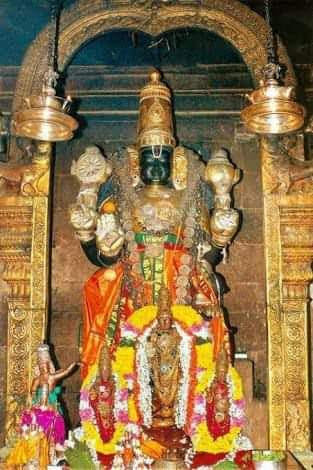
Vishnu kanchi is that part of the town, where several temples dedicated to Maha Vishnu and his various manifestations (Avatars) can be seen. Varadaraja Perumal is Vishnu with 4 arms is the main deity of worship and Perumdevi (Mahalakshmi) his consort has a separate shrine. There are angels belonging to Vaishnava faith like Vishvaksena, Garuda, Hanuman and Sesha, Sudarshana and Shankha of Vishnu.

Varadaraja statue is believed to exist here since 3rd century, but was hidden later during invasion by foreigners in search of gold and precious ornaments, under a fig tree, hence the name Athi  Varada. A wooden idol was put in its place and later replaced. To mark this incident, once in 37 years, the  image of Varadaraja is taken out of the temple  pond and kept for darshan to devotees, immersed again after several days, with Puja on these days, attracting large  crowds.

The temple has  32 surrounds, and a 100-pillared Hall. The main tower-Rajagopuram is about 130 ft tall. The temple has several beautiful carvings belonging to Chola. Pandya, Nayaka and other periods.

A pair of Lizards-both Silver and Gold are carved at a roof corner, which as per legends, are images of cursed Rishis like Gautama and his disciple. Inscriptions in and around Kanchipuram temple show its antiquity.

As per some Puranas and local legends, Brahma performed tapas to please Mahavishnu and the latter  manifested as ‘bestowing’ Varadaraja. Goddess Mahalakshmi is here named ‘ Perundevi’.  Kanchi is one among 7 kshetras-holy places known to grant eternal liberation of good souls who visit here in their life, sins, washing away their like other places like Ayodhya, Mathura, Maya, Dwaraka  and Kashi Kshetras.

There are 3 distinct yet co-existing pilgrim centres here- Vishnu Kanchi, Shiva Kanchi,  each with  magnificent shrines of their faith. Varadaraja Perumal (Vishnu), Ekamreshwara (Shiva), and Jain Kanchi has images of Tirthankaras.

While Vishnu manifested on prayers by Brahma, Parvati observed penance to seek only Shiva as her husband, though her  parents were not happy to give her to Shiva,  who lived  in burial ground clad in elephant’s skin. Nothing could divert Parvati’s attention, and Shiva appeared under a single mango tree, hence called Ekamranatha  ( Kailasanathar) Shiva, and Parvati as Kamakshi. This place is called Dakshina Kashi, in southern part of India. This place has a history of at least 2500 years. Ancient Sanskrit grammarians- Patanjali and Panini ( 300-500 B.C) refer this city as Kanchiprasta. Shiva appered here as Prithvilingam, a lingam of soil, hence Abhishekam for lord is made from oil and not water. 

Kanchipuram  was a very important center of trade and commerce in South of India with fine Silk, Cotton and metalwork. Kanjivaram silk sarees woven by traders here at their homes as family occupation has a long history.

Interestingly, among 108 Divyadeshas  (noted  pilgrim centres) of Sri Vaishnava  faith, 15 are located in Kanchipuram. It was a prominent place of religious and theological studies for Vaishnavas, Shaivas, and Jains and Buddhists. Though Buddhist places have now  vanished, traditional  learning is still prevalent in schools of respective faiths. Sri Vyasa tirtha, prominent Saint of Madhva Vaishnava faith during Vijayanagar Empire, is learnt to have stayed here for his initial learning, with a Matha of his followers still has a strong following.

Kanchi has religious Gurupithas  of several vedic faiths-Advaita, Dvaita and Vishistadvaita schools. Kanchi Shankaracharya  Pitham has its headquarters in  Kanchi Puram. Rajaraja II, Kulottunga, Vikrama Chola, and Pallava rulers- Simhavishnu, mahendra Varman, Simha Varman are famous rulers of this province.

Silk and Cotton yarn, dyeing, rice mills and other industries account for the region’s economy. It is a well-known tourist location with increasing business in hotel and hospitality sector.

Main entrance to Varadaraja temple. 

Kanchipuram is on the banks of  Vegavati, a tributary to river   Palar. It is a Head quarters  of Kanchipuram district in Tamil Nadu. The city is 270 KMs from Bengaluru, and 108 KMs from Tirupati. It is connected from Chennai, 75 KMs, by Bus, air,  train and the nearest Airport is Chennai. October to January is very comfortable season to visit Kanchipuram. 


Intellectual debates between rival schools

There are few instances in the history of Indian schools of thought, particularly Vedanta where there were debates and dialectical argumen...